Key West Aquarium

One of the oldest aquariums in the United States, the Key West Aquarium first opened its doors at 1 Whitehead Street on February 18, 1935, as the first tourist attraction in Key West (admission was 15 cents for adults and 5 cents for children!). Constructed as part of the Works Progress Administration Program during the Great Depression, the aquarium was the brainchild of Dr. Robert Van Deusen, a director of the Fairmont Park Aquarium in Philadelphia, and originally featured an “open-air concept.” During World War II, the U.S. Government leased the aquarium briefly to the Marine Corps, Navy and Coast Guard for use as an indoor rifle range. Pulitzer Prize-winning poet James Merrill referenced the aquarium in his poem, “Key West Aquarium: The Sawfish.” Current Key West Aquarium exhibits include Alligator Exhibit, Atlantic Shores Exhibit, Jellyfish Exhibit, Feed a Shark, Touch Tank and Sea Turtles Conservation Tour. The Key West Aquarium is open daily from 9 AM to 6 PM. Admission is $17.19 for adults, $10.74 for children (ages 4-12) and $15.04 for seniors.

Fort East Martello Museum, Key West

Housed in a Civil War-era fort with eight-foot-thick granite walls, the Fort East Martello Museum & Gardens contains a unique collection of artifacts, including the scrap metal junk sculptures of Stanley Papio, the Key West folk art of Mario Sanchez and, perhaps most famously, Robert the Haunted Doll, which once belonged to Key West artist Robert Eugene Otto (when in doubt, “Blame it on Robert!”). Other highlights of the museum include artifacts from the Florida East Coast Railroad, sponge industry and much more.

Fort Jefferson

drytortugas

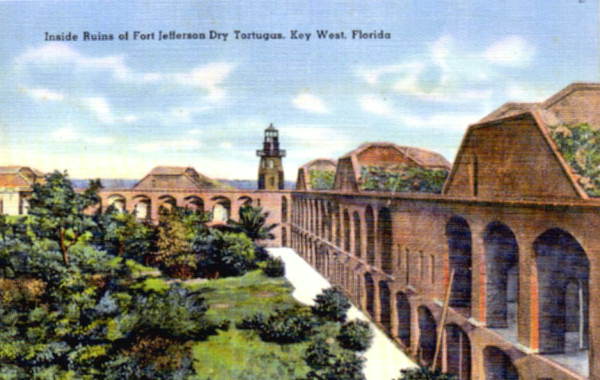
The largest all-masonry fort in the United States, Fort Jefferson (named after Thomas Jefferson) was constructed with more than 16 million bricks between 1846 and 1875 on Garden Key, which lies approximately 70 miles West of Key West. A federal outpost during the Civil War, Fort Jefferson held more than 500 prisoners by 1865 and in July of that year added Dr. Samuel Mudd, Edmund Spangler, Samuel Arnold and Michael O’Laughlen – all of whom had been convicted in the assassination of President Abraham Lincoln. Mudd was eventually pardoned by President Andrew Johnson after treating the victims of a yellow fever epidemic at Fort Jefferson in 1867. The Prisoner of Shark Island (1936), which starred Warner Baxter and Gloria Stuart, was loosely based on the life of Mudd. In 1935, President Franklin D. Roosevelt designated the area as Fort Jefferson National Monument and the fort was listed on the National Register of Historic Places in 1970. Fort Jefferson lies within the 64,701-acre Dry Tortugas National Park, which is accessible only by boat or seaplane.