Lake Monroe Bridge

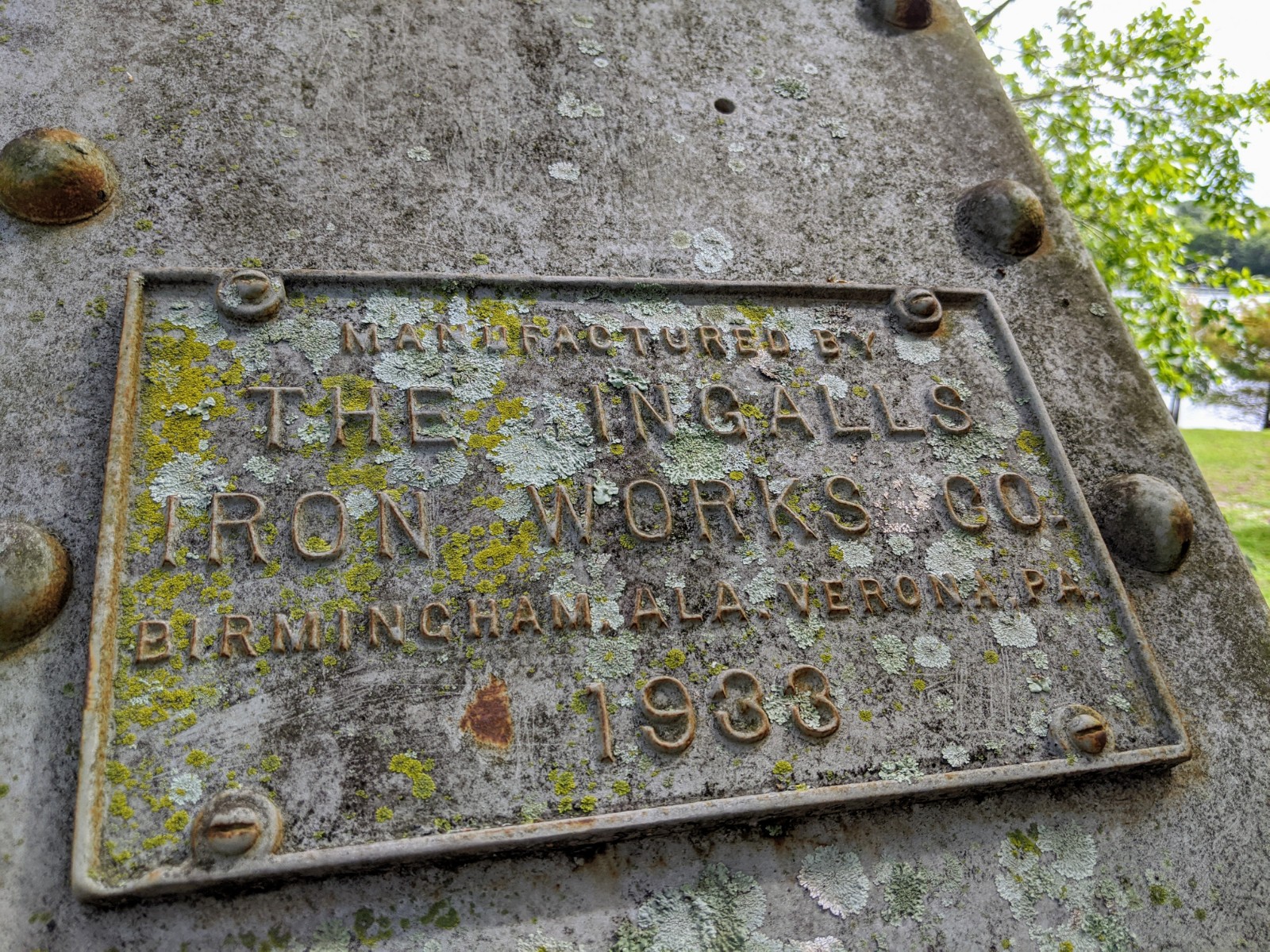
The historic Lake Monroe Bridge can be found at the scenic Lake Monroe Wayside Park in Sanford. According to the Lake Monroe Bridge historical marker: “The Lake Monroe Bridge was the first electrically operated swing bridge in Florida. In 1932-33 the State used federal assistance to build this bridge, which replaced a wooden toll bridge that was manually operated. The construction of the bridge provided economic relief for an area hurt by the economic collapse of the Depression era. The bridge was fabricated by Ingall’s Iron Works of Birmingham, Alabama; the swing machinery manufactured by Earle Gear and Machine Co., Philadelphia, Pennsylvania; and it was erected by W. W. White Steel Construction of St. Petersburg, Florida. Kreis Contracting Company of Knoxville, Tennessee was the general contractor for the Florida Department of Transportation. The Florida Department of Transportation and Seminole County cooperated in preserving the swing span as a fishing pier when the new Benedict Bridge was completed in 1994.”

The Tropic of Cracker

“The Tropic of Cracker survives in myth, memory and love of natural Florida. It exists more in the mind than in geography, more in the memory than in the sight, more in attitude than in the encounter … This book tells you about one man’s vision of a state struggling to remain true to itself. It mixes new essays with a span of earlier ones written during nearly a quarter century of roving the state as a columnist for The Miami Herald. All of them, in sum, help illuminate and explain the Tropic of Cracker.” – Al Burt

John Muir at Cedar Key


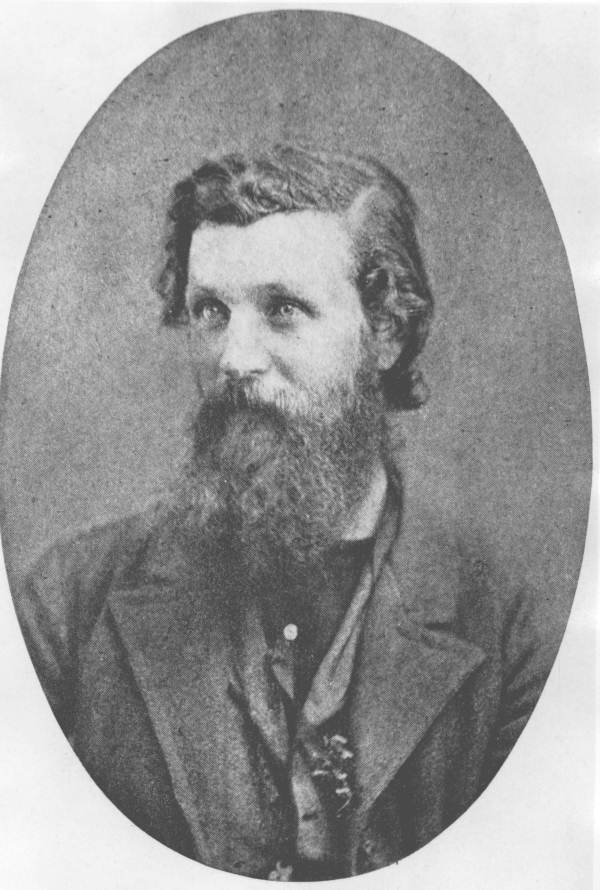
According to the Florida Historical Marker: “John Muir, noted naturalist and conservation leader, spent several months in Florida in 1867. He arrived at Cedar Key in October, seven weeks after setting out from Indiana on a ‘thousand-mile walk to the Gulf.’ Muir’s journal account of his adventure, which was published in 1916, two years after his death, includes interesting glimpses of the quality of life in the post-Civil War south. ‘The traces of war,’ he wrote, ‘are not only apparent on the broken fields, mills, and woods ruthlessly slaughtered, but also on the countenances of the people.’ Florida deeply impressed the twenty-nine year old Muir. He remembered the ‘watery and vine-tied’ land where ‘the streams are still young,’ which he had seen and sampled on his way from Fernandina. It was while recovering from a bout with malaria in Cedar Key that Muir first expressed his belief that nature was valuable for its own sake, not only because it was useful for man. This principle guided John Muir throughout his life. In early 1868, he left Cedar Key and eventually settled in California, where he helped establish the Yosemite National Park and, in 1892, the Sierra Club, which became one of our nation’s best known environmental organizations.”

Photo Credit: John Muir. ca 1870. Black & white photonegative, 3 x 5 in. State Archives of Florida, Florida Memory, accessed 21 May 2019.

Cypress Knee Museum

cypresskneemuseum

Cypress Knee Museum, Palmdale. Visionary Tom Gaskins first became fascinated with cypress knees in the 1930s and his obsession evolved into a famous roadside attraction along U.S. 27 in Palmdale that boasted a museum, cypress knee factory, gift shop and crudely designed catwalk through a cypress swamp. Signs along the highway would beckon tourists to stop at the museum with messages such as “Lady, If He Won’t Stop, Hit Him On Head With Shoe.” A barefoot Gaskins donning his favorite cypress hat would often greet visitors and give them a highly entertaining tour of the facilities, along with some of his favorite cypress knees such as the one that resembled a “Lady Hippo Wearing a Carmen Miranda Hat.” Gaskins even self published a book in 1978 called Florida Facts and Fallacies. The “About the Author” section of the book states that Gaskins “worked with and was salesman for Gator Roach killer until 1934 when he married Virginia Bible and started the cypress knee industry . . . The Cypress Knee Museum was opened in 1951 . . . [Gaskins] is a woodsman, hunter, fisherman, woodcarver, physical culturist (jogged eleven miles on his 69th birthday), member of John Birch Society, said-to-be wit and philosopher, and wood-be perfectionist. He holds ten U.S. patents.” Unfortunately, with the arrival of the Florida Turnpike, I-95 and I-75, tourist traffic along U.S. 27 dried up and the Cypress Knee Museum hit hard times. Gaskins passed away in 1998 and his son, Tom Jr., tried valiantly to keep the museum open but was forced to close up shop in 2000 after a break-in.

Xanadu: Home of the Future

xanaduhomeofthefuture

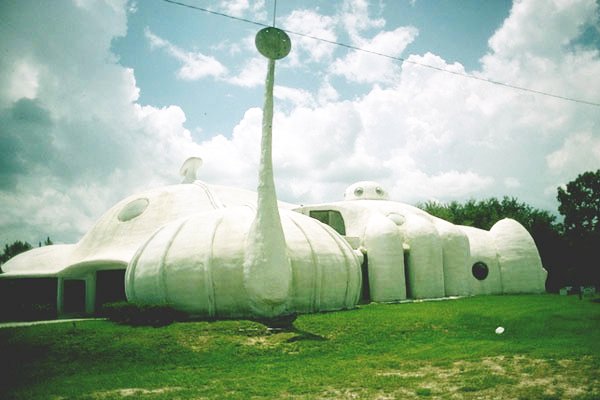
Xanadu: Home of the Future, Kissimmee. Built in 1983, the odd, bubble-shaped Xanadu: Home of the Future attraction off U.S. 192 was actually one of three Xanadu homes of the future (the other two were located in Gatlinburg, Tennessee, and Wisconsin Dells, Wisconsin). The name “Xanadu” was chosen as a homage to Kublai Khan’s summer capital, which inspired Samuel Taylor Coleridge’s famous poem, “Kubla Khan.” All three energy-efficient, dome-shaped homes were built of polyurethane foam and known for their curved walls and cramped rooms. However, the technology within the Xanadu homes became laughably dated quickly. Xanadu closed its doors in 1996 and became a haven for vandals and homeless squatters before being finally demolished in 2005. The abandoned Xanadu house was featured in the 2007 documentary, Urban Explorers: Into the Darkness.