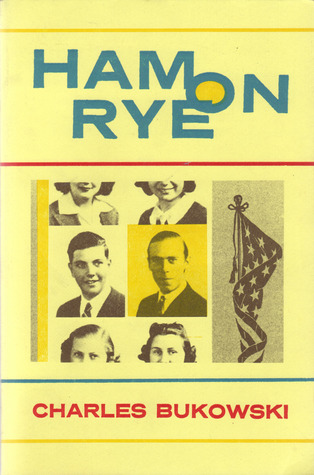
“I wasn’t a misanthrope and I wasn’t a misogynist but I liked being alone. It felt good to sit alone in a small space and smoke and drink. I had always been good company for myself.” According to Charles Bukowski’s fourth novel, Ham on Rye (1982), he had a miserable childhood courtesy of his father, a sadistic tyrant who regularly beat young Henry and his mother over the slightest infractions. To make matters worse, Bukowski suffered from a rare skin disorder, diagnosed as acne vulgaris, once he reached his teens. His only refuge was the local public library, where he voraciously devoured the writings of “The Lost Generation” school of American novelists such as Ernest Hemingway (whose later works he despised), Sherwood Anderson and John Dos Passos, as well as the works of European writers, including Fyodor Dostoyevsky’s Notes from the Underground, Knut Hamsun’s Hunger and Louis-Ferdinand Celine’s Journey to the End of Night. Nikki Sixx of Mötley Crüe once called Ham on Rye “an education in rebellion.” Who can argue with that? Pick up a copy today and enlighten yourself!
 Wandering Florida