
“Everybody wanted something from George Gattling. They wanted sex and new seat covers, money and confessions, a little bit of love and a lot of answers. That’s why George liked his hawk. All it asked of him was an opportunity to kill.”
“Everybody wanted something from George Gattling. They wanted sex and new seat covers, money and confessions, a little bit of love and a lot of answers. That’s why George liked his hawk. All it asked of him was an opportunity to kill.”
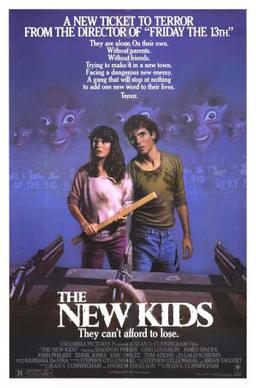
Harry Crews wrote the uncredited screenplay for The New Kids (1985), a little-known “horror-thriller film” that was directed by Sean Cunningham (Friday the 13th) and filmed in Homestead, Florida; starred Lori Loughlin, Shannon Presby and James Spader; and was billed as “A New Ticket to Terror from the Director of Friday the 13th!”
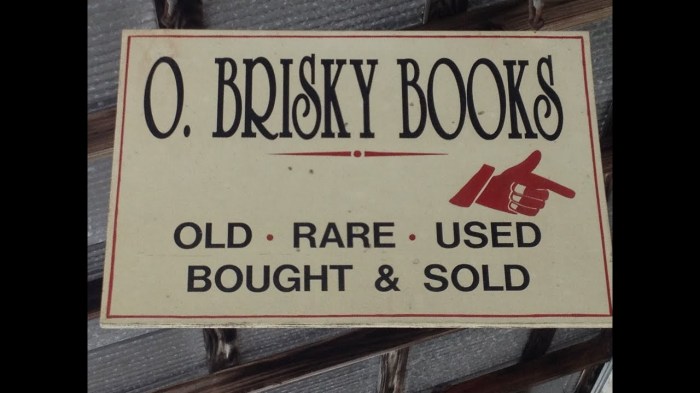
Whenever I used to pass through the charming town of Micanopy just South of Gainesville, I used to stop by one of my favorite used bookstores, O. Brisky Books, which had a great selection of Florida-related literature, among many other topics. In fact, just about my entire Harry Crews literary collection was obtained there. Since the bookstore didn’t accept credit cards, one time I had to run over to the ATM at Pearl Country Store to get enough cash to buy a rare edition of Crews’ third novel, This Thing Don’t Lead to Heaven (1970). I can assure you it was well worth the hassle! The owner, O.J. Brisky, would always engage me in a conversation about Crews (1935-2012) that would go something along the lines of this brief exchange:
Brisky: “Have you heard anything about how Harry’s doing?”
Me: “I heard through the grapevine that he’s not doing too well healthwise.”
Brisky: “Yeah, that’s what I’ve been hearing too. It’s too bad. Hope he’s feeling better soon.”
Me: “Yeah, me too.”
Ideally located at 112 N.E. Cholokka Boulevard in downtown Micanopy, O. Brisky Books had no air conditioning and the door was always propped open. There was a bench outside where Brisky himself often could be found greeting customers and reading one of the books from his diverse inventory. The adventurous browser at O. Brisky Books would often walk away with a handful of books totally unrelated to anything he or she began their search for!
Born in Hungary, Brisky grew up in Louisiana and attended LSU, where he majored in American Literature. Brisky, who served as a reporter and editor before opening his first used bookstore in Tarpon Springs, later helped start the Florida Antiquarian Book Fair. He had an encyclopedic knowledge of his inventory of more than 50,000 books, a sizable selection of which I’m sure he read over the years. Sadly, Brisky passed away in January 2014 at the age of 71 and the bookstore closed down for good shortly thereafter. I haven’t been back to Micanopy since.


Donn Pearce wrote the 1965 novel Cool Hand Luke, which was loosely based on the two years he spent on a prison road gang. This fact alone makes him cooler than any of us. After Pearce sold the movie rights to Warner Bros. for $80,000, the novel was turned into a classic 1967 film of the same name directed by Stuart Rosenberg and starring Paul Newman in the title role of “Lucas ‘Luke” Jackson” (his signature role in my opinion). The film also starred Strother Martin (“Captain”), Harry Dean Stanton (“Tramp”), Dennis Hopper (“Babalugats”), Ralph Waite (“Alibi”), Wayne Rogers (“Gambler”), Anthony Zerbe (“Dog Boy”), Richard Davalos (“Blind Dick”), Joe Don Baker (uncredited as “Fixer”), Jo Van Fleet (Luke’s mother, “Arletta”) and Joy Harmon (“The Girl”). Pearce himself made a cameo in the film as a convict known as “Sailor.” Although he co-wrote the script (for an additional $15,000) with screenwriter Frank Pierson (Dog Day Afternoon), Pearce absolutely hated the movie. “I seem to be the only guy in the United States who doesn’t like the movie,” Pearce told the Miami Herald in 1989. “Everyone had a whack at it. They screwed it up 99 different ways.” For example, Pearce thought that Newman was totally wrong for the part. In addition, it was actually Pierson who added the famous line, “What we’ve got here is failure communicate,” to the script. However, Pearce argued that the “redneck” Captain would never have had such a word in his vocabulary. The line later turned up in two Guns N’ Roses songs: “Civil War” from Use Your Illusion II (1991) and “Madagascar” from Chinese Democracy (2008). George Kennedy ended up winning a “Best Supporting Actor” Oscar for his amazing performance as “Dragline.” Newman was nominated for a “Best Actor” Oscar, but lost out to Rod Steiger for In the Heat of the Night. Pearce and Pierson were also nominated for a “Best Screenplay” Oscar, but lost out to Stirling Silliphant for In the Heat of the Night. Most of the filming itself took place not in Florida but in Stockton, California. The infamous boxing scene between Luke and Dragline took three days to shoot. Stanton taught Newman how to play “Plastic Jesus” on the banjo. Believe it or not, Telly “Kojak” Savalas was initially tapped to play Luke, but he was filming The Dirty Dozen in Europe at the time (Jack Lemmon also briefly considered for the role!). In addition, Bette Davis turned down the role of Arletta that went to Jo Van Fleet.
Donald Mills Pearce was born on September 28, 1928, in Croydon, Pennsylvania, a suburb of Philadelphia. After dropping out of high school in the 10th grade and serving in the United States Army during World War II (he lied about his age to join up and then went AWOL), followed by a stint in the Merchant Marine, Pearce got involved in counterfeiting, safecracking and burglary. In 1949, he was arrested in Tampa for attempting to rip off a movie theater and served two years hard labor on a Florida chain gang, mostly at the Tavares Road Prison in Lake County (which he labeled “a chamber of horrors”). It was here he heard about the legend of “Cool Hand Luke,” who was killed during a prison escape attempt. In a 2005 interview with the Sun Sentinel, Pearce remarked, “I never knew Luke … He was a legendary con, famous for escaping. I did know the walking boss who shot him. I put all these stories together. I mixed legends and used myself as a model. The real Luke never bet the guards he could eat 50 hard-boiled eggs. That was me. They called off the bet after they saw how much I could eat.” Pearce later lived in Fort Lauderdale and supplemented his writing efforts over the years with work as a bail bondsman, private investigator and bounty hunter (AKA “skip man”), as well as freelance journalist, writing for the likes of Playboy, Esquire and Oui. Pearce was also friends with literary outlaw Harry Crews (A Feast of Snakes). He and his wife Christine raised three sons in South Florida. Pearce’s other works include Pier Head Jump (1972), Dying in the Sun (1974) and Nobody Comes Back (2005), a novel about the Battle of the Bulge during World War II. According to Pearce in the 2005 Sun Sentinel interview, “The world really isn’t evil, it’s just dumb … There’s no cure for dumb. Dumb will outsmart you.”
 Wandering Florida