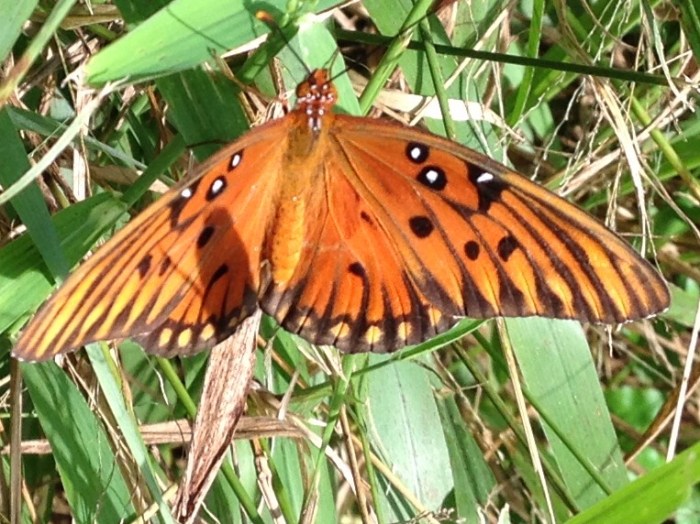
Hike #7: Hidden Waters Preserve, Eustis


Hike #7, 52 Hike Challenge: Hidden Waters Preserve, Eustis. Nestled off Country Club Drive in Eustis (take East Crooked Lake Road off 441), Hidden Waters Preserve is a hidden gem encompassing 90 acres and featuring a sinkhole lake called Lake Alfred at its center. Visitors can experience six distinctive hiking trails: Lake Alfred Trail (0.6 mile), Hammock Trail (0.2 mile), Ravine Trail (0.4 mile), Prickly Pear Trail (0.3 mile), Longleaf Pine Trail (1.5 miles) and Gopher Tortoise Trail (0.2 mile). By the way, the Preserve was formerly known as the Eichelberger Sink. The elevation change from the edges of the Preserve to the bottom of the sink is 90 feet. Keep an eye out for gopher tortoises (didn’t see any this time out). Hidden Waters Preserve is open daily from 8 AM until sunset. Wildlife sightings: Cooper’s hawk, rabbit. Distance: 3.4 miles.

Hike #6: Green Springs Park, Enterprise


Hike #6, 52 Hike Challenge: Green Springs Park, Enterprise. Encompassing 36 acres near the north shore of Lake Monroe, Green Springs Park boasts one of Florida’s few green sulfur springs (note: swimming and fishing are not allowed!). We enjoyed strolling on both the paved and natural trails that wind through the park, which also features scenic overlooks, a playground and picnic pavilions. Green Springs Park also serves as a trailhead for both the East Central Regional Rail Trail and Spring-to-Spring Trail. A “hotel for invalids” was built at this site by Cornelius Taylor in 1841 as one of the first health spas in the Sunshine State. Tourists were attracted to the springs in the belief that they could cure various ailments. In the late 1800s, Green Springs was part of a huge estate built by wine importer and steamboat magnate Frederick deBary. Distance: 1.2 miles.


Wekiva Island


Want to “experience the real Florida”? Spend a day at Wekiva Island! Our ideal excursion to Wekiva Island involves getting there early in the morning before the crowds, renting kayaks or canoes, and paddling down the Wekiva River. Once we reach Wekiwa Springs State Park (a small admission fee is charged), we take a dip in the crystal-clear springs. Then we leisurely paddle back to Wekiva Island for juicy burgers and ice-cold beers. Wekiva Island features a scenic boardwalk, sand volleyball court, Without a Paddle Cafe, General Store and The Tooting Otter craft beer and wine bar. It’s a great place to take visitors when they need a welcome break from all the stresses associated with theme park exploration! Wekiva Island is located at 1014 Miami Springs Drive in Longwood. Hours are 8 AM to 7 PM Sunday through Thursday and 8 AM to 11 PM Friday and Saturday.

West Orange Trail


The West Orange Trail runs for 20.8 miles between Apopka and Oakland. Today I walked from the Ingram Outpost (Mile 11.8) to the Apopka Vineland Outpost (13.6) and back. Although the West Orange Trail has become diminished in many areas due to rampant development, there are several stretches left where you can still imagine you are briefly wandering in the wilderness far away from civilization. We definitely need to help preserve what’s left of this wonderful trail before it’s too late! For more information about the West Orange Trail, visit orangecountyfl.net.

Fort Jefferson

drytortugas

The largest all-masonry fort in the United States, Fort Jefferson (named after Thomas Jefferson) was constructed with more than 16 million bricks between 1846 and 1875 on Garden Key, which lies approximately 70 miles West of Key West. A federal outpost during the Civil War, Fort Jefferson held more than 500 prisoners by 1865 and in July of that year added Dr. Samuel Mudd, Edmund Spangler, Samuel Arnold and Michael O’Laughlen – all of whom had been convicted in the assassination of President Abraham Lincoln. Mudd was eventually pardoned by President Andrew Johnson after treating the victims of a yellow fever epidemic at Fort Jefferson in 1867. The Prisoner of Shark Island (1936), which starred Warner Baxter and Gloria Stuart, was loosely based on the life of Mudd. In 1935, President Franklin D. Roosevelt designated the area as Fort Jefferson National Monument and the fort was listed on the National Register of Historic Places in 1970. Fort Jefferson lies within the 64,701-acre Dry Tortugas National Park, which is accessible only by boat or seaplane.