Fort East Martello Museum, Key West

Housed in a Civil War-era fort with eight-foot-thick granite walls, the Fort East Martello Museum & Gardens contains a unique collection of artifacts, including the scrap metal junk sculptures of Stanley Papio, the Key West folk art of Mario Sanchez and, perhaps most famously, Robert the Haunted Doll, which once belonged to Key West artist Robert Eugene Otto (when in doubt, “Blame it on Robert!”). Other highlights of the museum include artifacts from the Florida East Coast Railroad, sponge industry and much more.

Ocean World

Opened in 1965, Ocean World was located on the 17th Street Causeway adjacent to Pier 66 in Fort Lauderdale and featured Davy Jones’ Locker, home to “The Flying Dolphin Show,” as well as a dolphin feeding pool, California sea lions, otters, sea turtles, fish, alligators and tropical birds. However, the small marine mammal park became the target of animal rights activists in the 1980s, which led to legal action from the U.S. Department of Agriculture (resulting in a $20,000 fine) and Ocean World ultimately was closed its doors in 1994. The park’s dolphins were reportedly relocated to a marine park in Honduras. A July 5, 1994, Sun-Sentinel article reported: “Ocean World, one of the city’s oldest and most controversial tourist attractions, will put on its last dolphin and sea lion show Aug. 31. Ocean World President George Boucher cited declining attendance and limited space for expansion as the reasons the 29-year-old marine theme park is closing.”

International Independent Showmen’s Museum, Riverview

The International Independent Showmen’s Museum in Riverview (adjacent to Gibsonton) boasts a fascinating collection of artifacts showcasing the history of the American carnival – don’t miss it! Highlights include a Johnny J. Jones Exposition 1948 Twin Diesel Catepillar Generator, Capell Bros Show Trailer, Authentic Antique Ferris Wheel and Merry Go Round, Cast Iron Sunburst Wagon Wheel, Decorated Wooden Wagon Wheel, Big 6 Gaming Wheel, Authentic Banner Art, Rocky Road to Dublin Original Car, 1915 Carousel Horse, Paris Revue Girl Show Exhibit, Carnival Games, Strates Steel Ride Wagon, Antique Bumper Car, Royal American Shows Girl Show Wagon and much more. The International Independent Showmen’s Museum is located at 6938 Riverview Drive. Hours are Saturday and Sunday from 12 PM to 5 PM.

Fort Jefferson

drytortugas

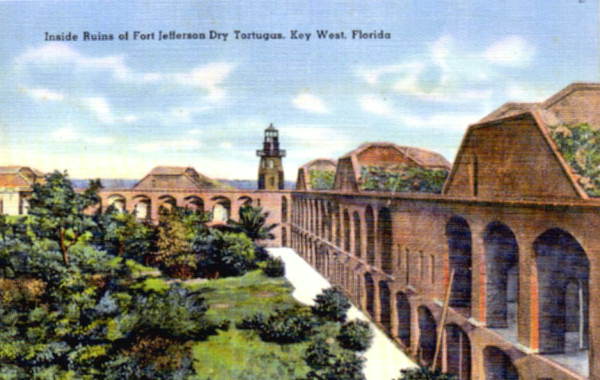
The largest all-masonry fort in the United States, Fort Jefferson (named after Thomas Jefferson) was constructed with more than 16 million bricks between 1846 and 1875 on Garden Key, which lies approximately 70 miles West of Key West. A federal outpost during the Civil War, Fort Jefferson held more than 500 prisoners by 1865 and in July of that year added Dr. Samuel Mudd, Edmund Spangler, Samuel Arnold and Michael O’Laughlen – all of whom had been convicted in the assassination of President Abraham Lincoln. Mudd was eventually pardoned by President Andrew Johnson after treating the victims of a yellow fever epidemic at Fort Jefferson in 1867. The Prisoner of Shark Island (1936), which starred Warner Baxter and Gloria Stuart, was loosely based on the life of Mudd. In 1935, President Franklin D. Roosevelt designated the area as Fort Jefferson National Monument and the fort was listed on the National Register of Historic Places in 1970. Fort Jefferson lies within the 64,701-acre Dry Tortugas National Park, which is accessible only by boat or seaplane.

Coral Castle

coralcastle

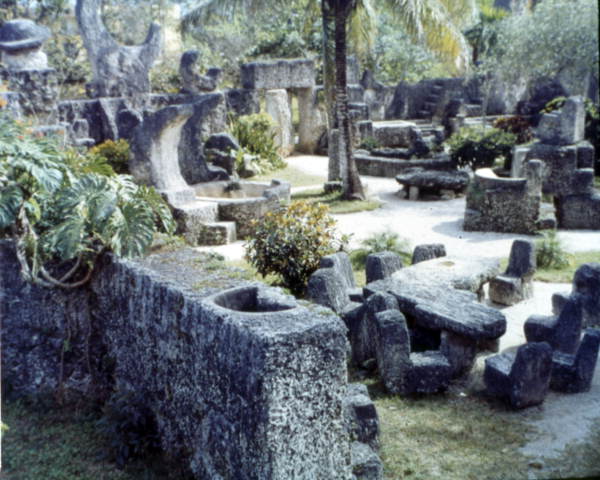
Known as “America’s Stonehenge,” Coral Castle serves as the bizarre masterpiece of diminutive Latvian immigrant Ed Leedskalnin (1887-1951), who somehow managed to procure and sculpt more than 1,100 tons of coral rock over a 28-year period into a “fantasy world carved out of stone” using only homemade tools. Originally dubbed “Rock Gate Park,” Coral Castle was reportedly built by Leedskalnin, who stood just 5 feet tall and weighed 100 pounds, as a monument to lost love (he was jilted by his fiancée in Latvia before heading to the United States). Billed as “A Sculpture Garden and Tribute to Los Love,” Coral Castle is located at 28655 South Dixie Highway in Homestead. By the way, Coral Castle was featured in an episode of In Search Of … (Season 5, Episode 16) titled “The Castle of Secrets” that first aired on January 24, 1981.

Ocala Caverns

Also once known as “Uranium Valley and Caves,” the Ocala Caverns were located on U.S. routes 301, 27 and 441, approximately eight miles South of Ocala. According to legend, the caverns were used as a hiding place by runaway slaves during the Civil War. The Ocala Caverns were open to the public as an attraction in the 1950s and 1960s, and at one time owned by a pro wrestler known as “Man Mountain Dean Jr.” and “Mighty Jumbo” (real name: Samuel Hesser), who weighed in at nearly 650 lbs., and Violet Ray, “Women’s Lightweight Wrestling Champion.” Attractions included two caves (one dry, one wet), an underground boat ride (basically Hesser kicked the rowboat out so tourists could get a glimpse of the cave and then he pulled it back with a rope), Callaway’s Rock Display, Inca Indian Museum, Wrestling Hall of Fame and Santa Claus Land (Hesser even made the December 1966 cover of the Ocala-Marion County Visitors Guide to the Kingdom of the Sun dressed as Santa Claus). The attraction closed in the late 1960s or early 1970s, and Hesser reportedly passed away from a brain tumor at the age of 51 in Iowa in 1974. In recent years, the Florida Speleological Society has made efforts to clean up the Ocala Caverns site.

Ernest Hemingway Home & Museum

ernesthemingwaymuseum

Built by 1851 by Asa Tift, a captain and ship’s architect, the house (the single largest residential property on the island) was bought by Ernest “Papa” Hemingway and his second wife, Pauline, in 1931 at a cost of $8,000 (it was actually a wedding gift from Pauline’s wealthy uncle, Gus). The couple lived there with their two sons, Patrick and Gregory (Ernest divorced Pauline in 1940 and married Martha Gelhorn three weeks later). Hemingway reportedly wrote the final draft of A Farewell to Arms, as well as classic short stories such as “The Snows of Kilimanjaro” and “The Short Happy Life of Francis Macomber,” at the house. He created a writing studio in the second floor of a carriage house on the property that was connected to the master bedroom by a walkway. A boxing aficionado, Hemingway built a ring in the backyard where he often sparred with local fighters. An in-ground, saltwater pool was added in 1938 at a cost of $20,000. Hemingway hired his friend and handyman Toby Bruce to build a high brick wall around the house as privacy from tourists anxious to catch a glimpse of the famous writer. Hemingway also hauled away a urinal from Sloppy Joe’s Bar to the house and turned it into a fountain in the yard. Approximately 40 to 50 polydactyl (six-toed) cats currently live on the grounds of the Hemingway Home. According to legend, the cats are descendants of Hemingway’s own six-toed cat, Snowball (however, Patrick has denied that his father owned any cats in Key West, only at his residence in Cuba, Finca Vigia). Designated a National Historic Landmark, the Ernest Hemingway Home is located at 907 Whitehead Street (across from the Key West Lighthouse).