Hike #44: Disney Wilderness Preserve


Hike #44: 52 Hike Challenge: Disney Wilderness Preserve, Poinciana. First things first: Besides serving as a mitigation project, Disney Wilderness Preserve doesn’t have anything to do with Walt Disney World Resort! Therefore, don’t expect a tram to take you from the parking lot to the trail. This ain’t the Jungle Cruise, folks! The 11,500-acre Preserve is actually owned and operated by The Nature Conservancy. We hiked the Red “Wilderness Trail” and took the short extension trail for a scenic view of Lake Russell. The entire trail was rather wet due to a recent thunderstorm. We also knocked out the White “Harden Trail,” while we saved the 3.6-mile Yellow Trail for next time. Despite the wet conditions, we had a good time and even saw a Scrub Jay, Red-Cockaded Woodpecker and Eastern Indigo Snake. Distance: 3.5 miles.
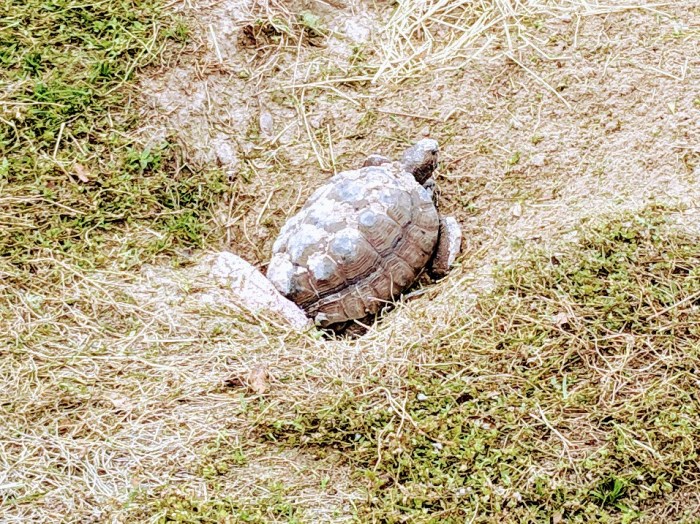
Save the Florida Gopher Tortoise

gophertortoise

  • Florida Gopher Tortoises (Gopherus polyphemus) are land-based, cold-blooded reptiles with wide flat claws that live in dry, sandy area with plenty of low-growing vegetation and do not know how to swim.
  • Florida Gopher Tortoises average 10-15 inches long and 8-15 lbs. in weight.
  • Florida Gopher Tortoises live from 40 to 60 years in the wild and can live more than 100 years in captivity.
  • Florida Gopher Tortoises dig burrows in the ground – usually between 15 and 30 feet in length.
  • Florida Gopher Tortoises are considered “keystone species” since their burrows provide shelter (from predators, extreme temperatures, fires, droughts and hurricanes) to approximately 360 other species of wildlife, including the Eastern Indigo Snake, Florida Mouse, Black Pine Snake and Gopher Frog.
  • Florida Gopher Tortoises can be found in each of Florida’s 67 counties, as well as South Carolina, Alabama, Mississippi, Louisiana and Georgia.
  • Florida Gopher Tortoises spend approximately 80 percent of their life underground (although this may fluctuate dramatically due to environmental conditions).
  • Florida Gopher Tortoises are protected as state-designated threatened species by Florida’s Endangered and Threatened Species Rule.
  • Florida Gopher Tortoises are recognized annually in the Sunshine State on Florida Gopher Tortoise Day on April 10.
  • Florida Gopher Tortoises are found in many different habitats, including mixed hardwood-pine communities, coastal grasslands and dunes, dry prairie, pine flatwoods and scrub.
  • Florida Gopher Tortoises are the only tortoise species of genus Gopherus found east of the Mississippi River (the other species being Mojave Desert Tortoise, Texas Tortoise, Bolson Tortoise, Sonoran Desert Tortoise and Sinaloan Desert Tortoise).
  • Florida Gopher Tortoises are primarily herbivores that eat grasses, saw palmetto berries, blackberries and blueberries, gopher apples, prickly pear cactus pads and mushrooms (although they also will occasionally eat bones from dead animals).
  • Florida Gopher Tortoises live in colonies that may number up to 50 tortoises (with sub-groups called pods).
  • Florida Gopher Tortoises face a significant threat due to both habitat destruction and land fragmentation.

As a threatened species, gopher tortoises “are protected under state law, Chapter 68A-27 of the Florida Administrative Code (F.A.C.). Property owners must obtain relocation permits from the Florida Fish and Wildlife Commission (FWC) to relocate all gopher tortoises before any land clearing or development activities can take place,” according to the FWC. For more information about the Florida Gopher Tortoise, visit the Gopher Tortoise Education Corner at the FWC website.

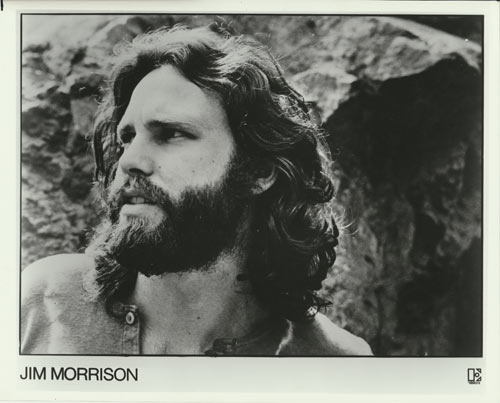
Jim Morrison’s Florida Roots

jimmorrison

Did you know … legendary Doors lead singer Jim Morrison was born in Melbourne, Florida, on December 8, 1943; attended both St. Petersburg Junior College and Florida State University in the early 1960s; was arrested for lewd and lascivious behavior, indecent exposure, open profanity and drunkenness after an infamous Doors concert at the Dinner Key Auditorium in Miami on March 1, 1969; and was posthumously pardoned by the State of Florida in December 2010?

Hike #43: Maritime Hammock Sanctuary


Hike #43: 52 Hike Challenge: Maritime Hammock Sanctuary, Melbourne Beach. On a rather cold, dreary and wet morning, we headed north from Disney’s Vero Beach Resort past Sebastian Inlet State Park toward the 150-acre Maritime Hammock Sanctuary in Melbourne Beach. Fortunately, when we arrived at the Sanctuary, the rain had somewhat tapered off and we had a nice (but sometimes slippery) hike. The Maritime Hammock Sanctuary, which is located inside the 900-acre Archie Carr National Wildlife Refuge, once served as the site of an exotic plant nursery. Distance: 2.8 miles.


Hike #42: Captain Forster Hammock Preserve


Hike #42: 52 Hike Challenge: Captain Forster Hammock Preserve, Vero Beach. During a seven-mile bike ride that started at Disney’s Vero Beach Resort and took us along the scenic Historic Jungle Trail, we made a pit stop at the delightful, 110-acre Captain Forster Hammock Preserve (named after an early settler to the area) and hiked to the beach and back (along with sampling some of the rather overgrown side trails along the way). Distance: 2 miles.


Hike #41: Twin Oaks Conservation Area


Hike #41: 52 Hike Challenge: Twin Oaks Conservation Area, Kissimmee. I arrived at Twin Oaks Conservation Area mid-morning and there were few people around. Except for a few guys fishing on the dock, I had the place to myself. The site of a former cattle ranch and sod production area, Twin Oaks offers a nice stroll through a wildlife habitat along the shores of Lake Tohopekaliga (aka Lake Toho), which is part of the Kissimmee Chain of Lakes. According to the official website, “Twin Oaks is characterized by improved pastures, live oak hammocks, wet prairies, freshwater marshes, shrub wetlands and remnant cypress.” The twin oaks that give the conservation area its name are very impressive! Be sure to bring a hat and some sunscreen since there is little shade during the entire hike. In addition to hiking and wildlife viewing, Twin Oaks offers equestrian trails, fishing, picnicking and primitive camping for groups. Distance: 1.9 miles.

Tennessee Williams in Key West

tennesseewilliams

“I went down to Key West because I love swimming . . . It was January, and I had to go someplace where I could swim in the winter so I came down here because it was the southernmost point, and I was immediately enchanted by the place. It was so much more primitive in those early days.” – Tennessee Williams (1911-83), quoted in Pop Culture Florida (2000) by James P. Goss

“Williams chose Key West as the first place to settle down after his newfound fame.  A visitor to the island in 1941, he moved there after Glass debuted on Broadway and lived briefly at the La Concha Hotel, where he is thought to have finished the first draft of another highly personal play, A Streetcar Named Desire, set in New Orleans. In 1949, he bought a home at 1431 Duncan Street, the only residence he would ever own outright.” – Florida Artists Hall of Fame Bio

“Tennessee Williams visited and lived in Key West from 1941 until his death in 1983.  It is believed that he wrote the final draft of Street Car Named Desire while staying at the La Concha Hotel in Key West in 1947.  He established residence here in 1949 and in 1950 bought the house at 1431 Duncan Street that was his home for 34 years.  He was part of the literary movement that resulted in Key West and the Florida Keys being recognized as the cultural and historical location it is today.” – Tennessee Williams Museum Bio

Hike #40: Lake Apopka Loop Trail

Hike #40: 52 Hike Challenge: Lake Apopka Loop Trail. If you’re into birding (and alligators!), you MUST take a hike along the Lake Apopka Loop Trail (or at least plan an outing to the Lake Apopka Wildlife Drive). More than 150 species of birds reportedly flock to Lake Apopka during the winter months. Encompassing 30,800 acres (making it the fourth largest lake in Florida), Lake Apopka was targeted for cleanup under the Surface Water Improvement and Management Act of 1987. I reached the Lake Apopka Loop Trail from the Magnolia Park Trailhead, although it also can be accessed from the Clay Island Trailhead, Green Mountain Scenic Overlook and Trailhead, North Shore Trailhead and Wildlife Drive entrance (2850 Lust Road). I saw plenty of birds, but no alligators this time out (perhaps due to it being a rather overcast day). Distance: 2.5 miles.

Hike #39: Enchanted Forest Sanctuary


Hike #39: 52 Hike Challenge: Enchanted Forest Sanctuary, Titusville. A well-maintained and diverse trail system winds its way through the immensely popular Enchanted Forest Sanctuary. That is why we got there right before the Sanctuary opened at 9 AM. However, there was already a group of Boy Scouts gathering in the parking lot, so we signed in quickly and headed on our way so we could have the trails to ourselves for a little while. The Enchanted Forest Sanctuary encompasses five basic habitat types: pine flatwood, prairie, oak, scrub, and mesic and hydric hammock. Our favorite trail was the Magnolia Loop, which features some majestic live oaks. The tail end of the Coquina Trail is also very cool. Also, don’t miss the chance to see the gopher tortoises at the entrance to the Sanctuary. All in all, a great hike! Distance: 3.1 miles.

Light My Fire

apocalypsenow3

“I knew Jim Morrison, in film school; he came to my house once–this was before he’d had a record out–with some acetates, demos, asking if I could help. I tried; I didn’t get anywhere. But the idea of using the Doors [in Apocalypse Now] came from ‘Light My Fire.’ That was from Milius: Kurtz’ people would play ‘Light My Fire’ through their loud­speakers, to jazz themselves up. In the end, there’s a battle, and North Vietnamese regulars come charging in to ‘Light My Fire.’ I went to the Philippines with that ending!” – Francis Ford Coppola, Rolling Stone interview, November 1, 1979