Jerry Jeff Walker

jerryjeff

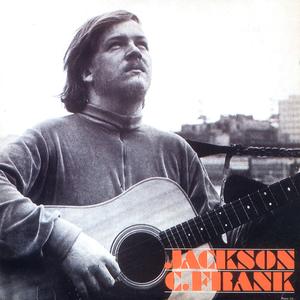
Between the late summer of 1994 and the fall of 1996, I worked as a lowly reporter for a small weekly newspaper, The News of Orange County, in Hillsborough, North Carolina. There weren’t many perks in this rather thankless job, but I did get a chance to cover the concert of one of my favorite singer-songwriters, Jerry Jeff Walker, who took the stage at the Big Barn for one magical evening of entertainment (sorry, I forget the actual date). Above is one of the photos I took documenting the event. I even got the chance to chat briefly with Jerry Jeff after the show. Truly one of the highlights of my brief stint as a reporter!

Hike #47: Kelly Loop Trail, Kelly Park, Apopka


Hike #47: 52 Hike Challenge: Kelly Loop Trail, Kelly Park, Apopka. Normally Kelly Park would be packed on a Saturday afternoon, but the Rock Springs Run was closed to tubers and swimmers on this particular day, so we enjoyed the park pretty much to ourselves. The scenic Kelly Loop Trail runs along the perimeter of the park and lets hikers get away from it all and delve into a little wilderness serenity. We were told that black bear sightings are common in the area, but we had no such luck. However, just the fact that the whole place wasn’t overrun with visitors was good enough for us. Nice spot! Distance: 2.75 miles.

Hike #46: Orlando Wetlands Park


Hike #46: 52 Hike Challenge: Orlando Wetlands Park, Christmas. If you want to totally immerse yourself in wildlife, few places in Central Florida beat Orlando Wetlands Park. With its immense popularity (especially among birders), the parking lot was almost full when I got there at 8:30 AM on a Saturday. However, I wandered away from the 2.5-mile “Birding Route” and headed around Lake Searcy, which I had to myself (along with the birds and alligators, of course!). Also, I viewed my first Roseate Spoonbill in the wild! Distance: 5 miles.

Andersonville


One of my ancestors, Jeremiah Weidman (of Navarre, Ohio), died in Andersonville Prison (aka Camp Sumter Military Prison) in 1864 at the age of 29. Jeremiah is briefly mentioned in MacKinlay Kantor’s 1955 Pulitzer Prize-winning novel Andersonville: “Where was Weidman? He was here, he was close, and he would not die until October.”

Hike #45: Corkscrew Swamp Sanctuary


Hike #45: 52 Hike Challenge: Audubon Corkscrew Swamp Sanctuary, Naples. We arrived at the Corkscrew Swamp Sanctuary around 10:15 AM on a Sunday morning and the parking lot was already full. So next time I want to get there when it opens at 7 AM. However, we did have a nice stroll along the 2.5-mile boardwalk and viewed the spectacular Bald Cypress Trees and a lot of wildlife such as two baby alligators, a raccoon and plenty of birds, including anhingas. We were disappointed to see all of the sprawling development on the way to the Sanctuary, however (all the more reason for everyone to support the health of sanctuaries like this one!). Owned and protected by the National Audubon Society, Corkscrew Swamp Sanctuary encompasses 13,000 acres in the heart of the Corkscrew Watershed (part of the Western Everglades) and features the largest remaining virgin bald cypress forest in the world. Distance: 2.5 miles.


Hike #44: Disney Wilderness Preserve


Hike #44: 52 Hike Challenge: Disney Wilderness Preserve, Poinciana. First things first: Besides serving as a mitigation project, Disney Wilderness Preserve doesn’t have anything to do with Walt Disney World Resort! Therefore, don’t expect a tram to take you from the parking lot to the trail. This ain’t the Jungle Cruise, folks! The 11,500-acre Preserve is actually owned and operated by The Nature Conservancy. We hiked the Red “Wilderness Trail” and took the short extension trail for a scenic view of Lake Russell. The entire trail was rather wet due to a recent thunderstorm. We also knocked out the White “Harden Trail,” while we saved the 3.6-mile Yellow Trail for next time. Despite the wet conditions, we had a good time and even saw a Scrub Jay, Red-Cockaded Woodpecker and Eastern Indigo Snake. Distance: 3.5 miles.

Save the Florida Gopher Tortoise

gophertortoise

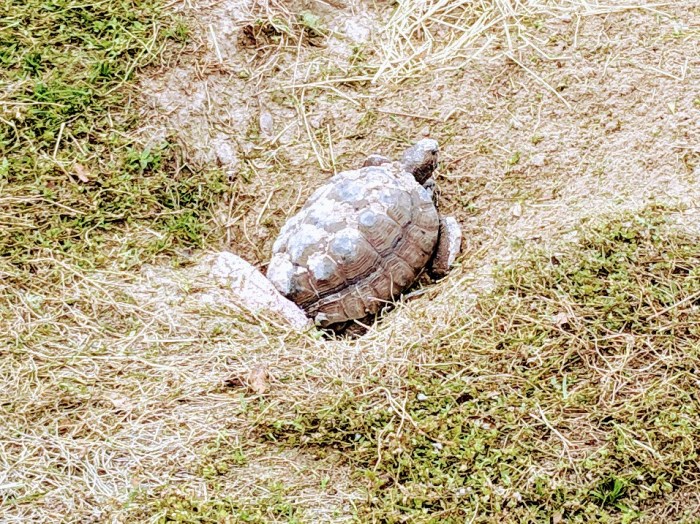
  • Florida Gopher Tortoises (Gopherus polyphemus) are land-based, cold-blooded reptiles with wide flat claws that live in dry, sandy area with plenty of low-growing vegetation and do not know how to swim.
  • Florida Gopher Tortoises average 10-15 inches long and 8-15 lbs. in weight.
  • Florida Gopher Tortoises live from 40 to 60 years in the wild and can live more than 100 years in captivity.
  • Florida Gopher Tortoises dig burrows in the ground – usually between 15 and 30 feet in length.
  • Florida Gopher Tortoises are considered “keystone species” since their burrows provide shelter (from predators, extreme temperatures, fires, droughts and hurricanes) to approximately 360 other species of wildlife, including the Eastern Indigo Snake, Florida Mouse, Black Pine Snake and Gopher Frog.
  • Florida Gopher Tortoises can be found in each of Florida’s 67 counties, as well as South Carolina, Alabama, Mississippi, Louisiana and Georgia.
  • Florida Gopher Tortoises spend approximately 80 percent of their life underground (although this may fluctuate dramatically due to environmental conditions).
  • Florida Gopher Tortoises are protected as state-designated threatened species by Florida’s Endangered and Threatened Species Rule.
  • Florida Gopher Tortoises are recognized annually in the Sunshine State on Florida Gopher Tortoise Day on April 10.
  • Florida Gopher Tortoises are found in many different habitats, including mixed hardwood-pine communities, coastal grasslands and dunes, dry prairie, pine flatwoods and scrub.
  • Florida Gopher Tortoises are the only tortoise species of genus Gopherus found east of the Mississippi River (the other species being Mojave Desert Tortoise, Texas Tortoise, Bolson Tortoise, Sonoran Desert Tortoise and Sinaloan Desert Tortoise).
  • Florida Gopher Tortoises are primarily herbivores that eat grasses, saw palmetto berries, blackberries and blueberries, gopher apples, prickly pear cactus pads and mushrooms (although they also will occasionally eat bones from dead animals).
  • Florida Gopher Tortoises live in colonies that may number up to 50 tortoises (with sub-groups called pods).
  • Florida Gopher Tortoises face a significant threat due to both habitat destruction and land fragmentation.

As a threatened species, gopher tortoises “are protected under state law, Chapter 68A-27 of the Florida Administrative Code (F.A.C.). Property owners must obtain relocation permits from the Florida Fish and Wildlife Commission (FWC) to relocate all gopher tortoises before any land clearing or development activities can take place,” according to the FWC. For more information about the Florida Gopher Tortoise, visit the Gopher Tortoise Education Corner at the FWC website.