

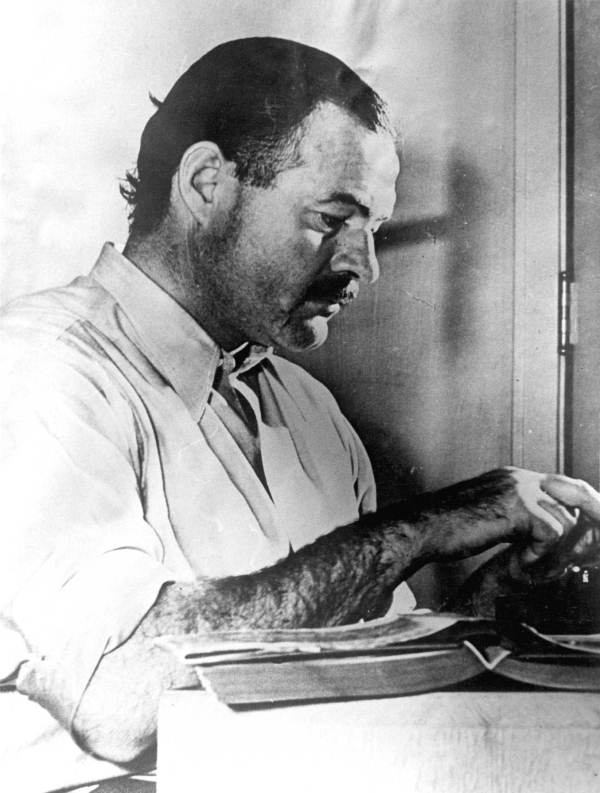
“Today is only one day in all the days that will ever be. But what will happen in all the other days that ever come can depend on what you do today.” – Ernest Hemingway, For Whom the Bell Tolls, 1940
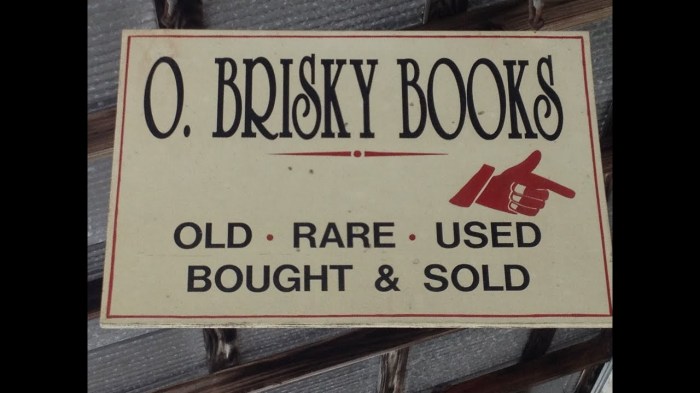
Whenever I used to pass through the charming town of Micanopy just South of Gainesville, I used to stop by one of my favorite used bookstores, O. Brisky Books, which had a great selection of Florida-related literature, among many other topics. In fact, just about my entire Harry Crews literary collection was obtained there. Since the bookstore didn’t accept credit cards, one time I had to run over to the ATM at Pearl Country Store to get enough cash to buy a rare edition of Crews’ third novel, This Thing Don’t Lead to Heaven (1970). I can assure you it was well worth the hassle! The owner, O.J. Brisky, would always engage me in a conversation about Crews (1935-2012) that would go something along the lines of this brief exchange:
Brisky: “Have you heard anything about how Harry’s doing?”
Me: “I heard through the grapevine that he’s not doing too well healthwise.”
Brisky: “Yeah, that’s what I’ve been hearing too. It’s too bad. Hope he’s feeling better soon.”
Me: “Yeah, me too.”
Ideally located at 112 N.E. Cholokka Boulevard in downtown Micanopy, O. Brisky Books had no air conditioning and the door was always propped open. There was a bench outside where Brisky himself often could be found greeting customers and reading one of the books from his diverse inventory. The adventurous browser at O. Brisky Books would often walk away with a handful of books totally unrelated to anything he or she began their search for!
Born in Hungary, Brisky grew up in Louisiana and attended LSU, where he majored in American Literature. Brisky, who served as a reporter and editor before opening his first used bookstore in Tarpon Springs, later helped start the Florida Antiquarian Book Fair. He had an encyclopedic knowledge of his inventory of more than 50,000 books, a sizable selection of which I’m sure he read over the years. Sadly, Brisky passed away in January 2014 at the age of 71 and the bookstore closed down for good shortly thereafter. I haven’t been back to Micanopy since.
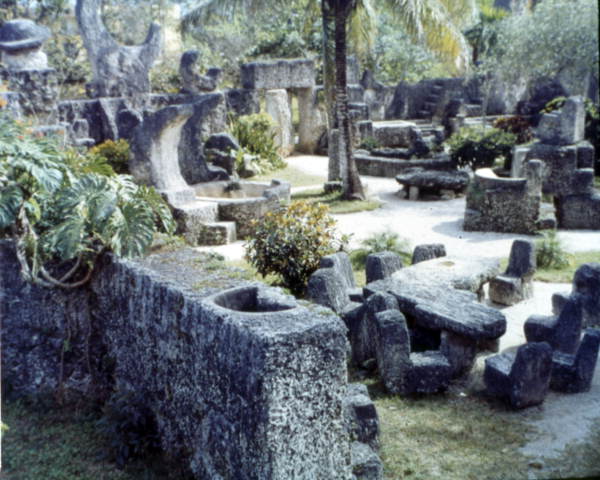
Known as “America’s Stonehenge,” Coral Castle serves as the bizarre masterpiece of diminutive Latvian immigrant Ed Leedskalnin (1887-1951), who somehow managed to procure and sculpt more than 1,100 tons of coral rock over a 28-year period into a “fantasy world carved out of stone” using only homemade tools. Originally dubbed “Rock Gate Park,” Coral Castle was reportedly built by Leedskalnin, who stood just 5 feet tall and weighed 100 pounds, as a monument to lost love (he was jilted by his fiancée in Latvia before heading to the United States). Billed as “A Sculpture Garden and Tribute to Los Love,” Coral Castle is located at 28655 South Dixie Highway in Homestead. By the way, Coral Castle was featured in an episode of In Search Of … (Season 5, Episode 16) titled “The Castle of Secrets” that first aired on January 24, 1981.


Also once known as “Uranium Valley and Caves,” the Ocala Caverns were located on U.S. routes 301, 27 and 441, approximately eight miles South of Ocala. According to legend, the caverns were used as a hiding place by runaway slaves during the Civil War. The Ocala Caverns were open to the public as an attraction in the 1950s and 1960s, and at one time owned by a pro wrestler known as “Man Mountain Dean Jr.” and “Mighty Jumbo” (real name: Samuel Hesser), who weighed in at nearly 650 lbs., and Violet Ray, “Women’s Lightweight Wrestling Champion.” Attractions included two caves (one dry, one wet), an underground boat ride (basically Hesser kicked the rowboat out so tourists could get a glimpse of the cave and then he pulled it back with a rope), Callaway’s Rock Display, Inca Indian Museum, Wrestling Hall of Fame and Santa Claus Land (Hesser even made the December 1966 cover of the Ocala-Marion County Visitors Guide to the Kingdom of the Sun dressed as Santa Claus). The attraction closed in the late 1960s or early 1970s, and Hesser reportedly passed away from a brain tumor at the age of 51 in Iowa in 1974. In recent years, the Florida Speleological Society has made efforts to clean up the Ocala Caverns site.


As a student at Stetson University during the mid-1980s, I would often join a ritual mass exodus off campus each Friday afternoon after classes to a somewhat rundown but lively fish camp overlooking the St. John’s River just off State Road 44 that we called Otis’s and the locals referred to as Sloan’s (both names derived from then-owner Otis Sloan). There we would spend hours hanging out on the dock drinking cheap beer and watching the boats slowly drift by – great memories! According to a September 2, 1998, Orlando Sentinel article, Sloan and his wife Myrtle opened the Shady Oak Fish Camp in 1957. I passed through DeLand in 2015 and took the above photos of Otis’s and it looked pretty much the same as I had remembered it. The Shady Oak Restaurant, which is located at 2984 West New York Avenue just west of downtown DeLand, reportedly suffered a fire in 2017 but has fortunately reopened.
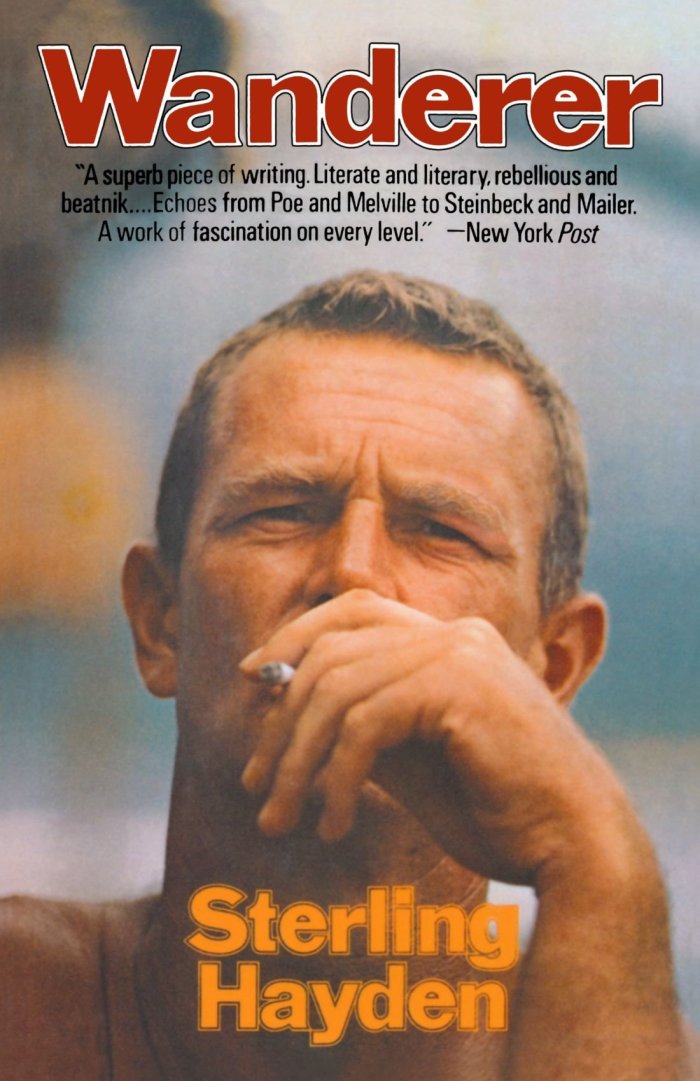
“To be truly challenging, a voyage, like a life, must rest on a firm foundation of financial unrest. Otherwise, you are doomed to a routine traverse, the kind known to yachtsmen who play with their boats at sea … ‘cruising’ it is called. Voyaging belongs to seamen, and to the wanderers of the world who cannot, or will not, fit in. If you are contemplating a voyage and you have the means, abandon the venture until your fortunes change. Only then will you know what the sea is all about.
‘I’ve always wanted to sail to the south seas, but I can’t afford it.’ What these men can’t afford is not to go. They are enmeshed in the cancerous discipline of ‘security.’ And in the worship of security we fling our lives beneath the wheels of routine – and before we know it our lives are gone.
What does a man need – really need? A few pounds of food each day, heat and shelter, six feet to lie down in – and some form of working activity that will yield a sense of accomplishment. That’s all – in the material sense, and we know it. But we are brainwashed by our economic system until we end up in a tomb beneath a pyramid of time payments, mortgages, preposterous gadgetry, playthings that divert our attention for the sheer idiocy of the charade.
The years thunder by, The dreams of youth grow dim where they lie caked in dust on the shelves of patience. Before we know it, the tomb is sealed.
Where, then, lies the answer? In choice. Which shall it be: bankruptcy of purse or bankruptcy of life?” – Sterling Hayden, Wanderer (1963)

“There are no other Everglades in the world. They are, they have always been, one of the unique regions of the earth, remote, never wholly known. Nothing anywhere else is like them; their vast glittering openness, wider than the enormous visible round of the horizon, the racing free saltness and sweetness of the their massive winds, under the dazzling blue heights of space. They are unique also in the simplicity, the diversity, the related harmony of the forms of life they enclose. The miracle of the light pours over the green and brown expanse of saw grass and of water, shining and slow-moving below, the grass and water that is the meaning and the central fact of the Everglades of Florida. It is a river of grass.” —Marjory Stoneman Douglas, The Everglades: River of Grass, 1947

 Wandering Florida